When someone collapses before you, the clock quits being abstract. You hear the superficial gasps, or you do not hear breathing in all. You really feel for a pulse and your hands are not as stable as you anticipated. That is the moment every glossy pamphlet about a first aid course is talking about, yet it does not feel like a pamphlet. It feels like a test.
I have educated people in first aid and CPR for enough time to see 2 patterns. First, virtually everyone indicates well and wants to help. Second, numerous hold-up training because they believe it will certainly take excessive time, be also technological, or need a multi day dedication they can not manage.
Fast first aid courses and express CPR training are a response to that truth. The good ones trim the fat without eliminating the abilities that in fact conserve lives. The poor ones seem like a hurried slideshow that delivers a first aid certificate but very little competence.
This overview is about telling those 2 apart, recognizing what you absolutely require from first aid and CPR training, and how to obtain fast certification without brief changing safety.
What "fast" actually implies in first aid and CPR training
Different service providers silently suggest different points when they promote a fast first aid course or express CPR course. Often "fast" is marketing language layered onto a basic timetable. Other times, it truly shows a pressed style, blended understanding, or evaluation just options.
In sensible terms, fast first aid training normally appears like one of 3 models:
A short, fully face to face first aid course that runs for half a day instead of a complete day. An express first aid course that makes use of online concept plus a much shorter sensible workshop. An evaluation based style where skilled individuals show skills without enduring the full class.Fast CPR courses tend to be even much shorter. A concentrated express cpr course may run 60 to 90 minutes personally, sometimes with pre learning online. A fast cpr refresher course can be under an hour for individuals that exercise skills frequently, like nurses or lifeguards.
None of this is immediately great or poor. What issues is what obtains compromised to gain rate. If method time, feedback, and reasonable situations are gotten rid of, the time you reduce the course could be lost in reluctance throughout a genuine emergency.
What you ought to in fact learn in a fast first aid and CPR course
A fast format does not excuse missing structures. Whether you pick a standard, fast, or express first aid course, the core skill set need to be recognisable.
Here is what a strong fast first aid and CPR course should cover at minimum:
Risk assessment and scene safety: Looking for risks prior to you rush in. Airway, breathing, flow: Basic methods to analyze responsiveness, breathing, and pulse if applicable. CPR training: Efficient upper body compressions, rescue breaths if included in your regional guidelines, and use an AED. Bleeding control and shock: Direct stress, elevation when ideal, and very early acknowledgment of shock. Essential first aid: Choking, burns, fractures or suspected fractures, and allergic reactions, specifically anaphylaxis and vehicle injector use.Some fast first aid courses will certainly also consist of brief coverage of medical problems like stroke, asthma, diabetic issues, and seizures. The depth differs. In my experience, a fast first aid course that spends at least a long time on stroke recognition and asthma is a lot more helpful than one that misses right from CPR to wrapping games.
For child care professionals, express childcare first aid training requires to include kid particular content: baby CPR, choking in toddlers, fever administration, and child safe positioning. If you deal with kids, a generic fast first aid course is rarely sufficient. Try to find an express child care first aid course or full childcare course, even if it is a little longer.
Online, mixed, and in person: exactly how fast formats actually work
Fast and express first aid courses typically shave time by changing how and where you discover. Understanding the trade offs will help you pick the best format.
Fully personally fast first aid training compresses explanations and decreases repeating. A knowledgeable instructor can do this without hurting top quality. The restriction is that the area still has a physical speed. 10 people sharing one manikin can not all press at once. If the course is as well short, technique goes down first.
Blended or express first aid courses relocate a lot of the concept online. You might watch videos on CPR, read about bleeding control, and address tests before you set foot in a classroom. The personally element then concentrates on hands on abilities, scenarios, and assessment.
Done well, mixed discovering can be much more effective than a much longer standard class. Learners get here with standard understanding and invest their time pressing, rolling, and improvisating. Done inadequately, it becomes a box ticking workout where every person skims modules the evening prior to and quickly neglects them.
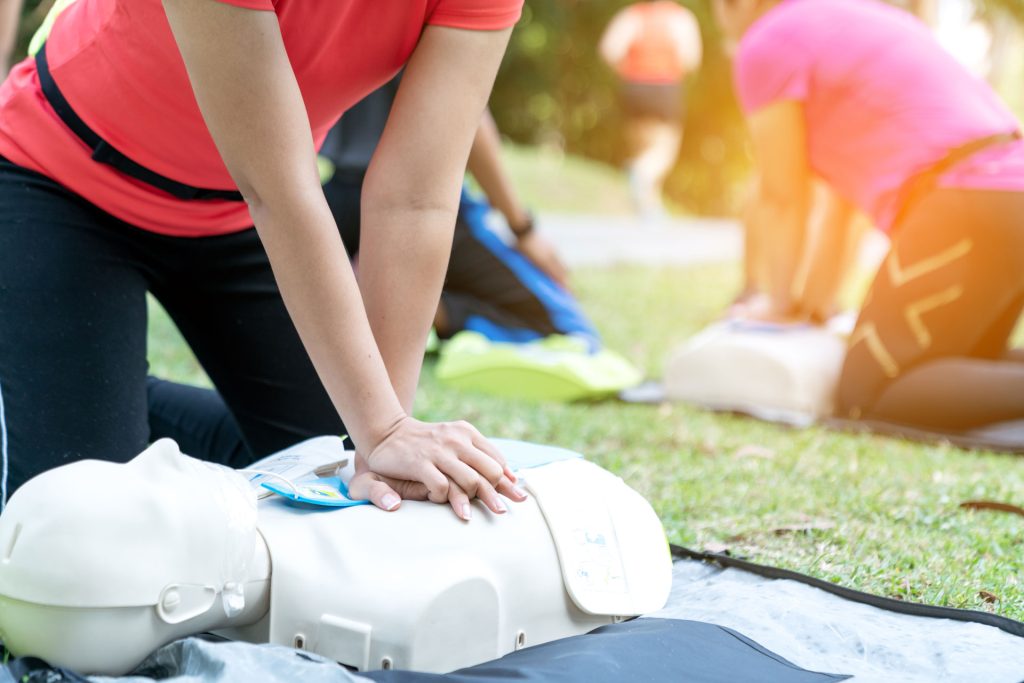
Fully on-line CPR courses or first aid courses, without face to face practice in any way, are where I see the most troubles. They are great for fundamental recognition, and in some cases appropriate for reduced risk functions that just need theoretical understanding. But if you have never ever literally locked your hands on a chest, counted your compressions aloud, and really felt just how much force is actually required, you are not prepared for actual CPR.
For first aid and cpr training classes that result in a commonly acknowledged first aid certificate, many first aid courses in Brisbane authorities still call for some in person element. If a provider uses fast certification without hands on training, reviewed the small print, especially if your employer, regulatory authority, or insurance firm has actually regulations about accepted first aid certificates.
How fast is too fast?
Everyone desires effectiveness. The question I ask when I audit fast first aid courses is straightforward: what would certainly I anticipate a trainee to bear in mind 3 months from now?
If the course is curtailed so much that individuals barely touch a manikin or plaster, you see a pattern. They leave with facts, not practices. They can inform you the compression to air flow proportion, but their hands slide on the breast and they do not press deep enough.
As a rough benchmark, for somebody with no prior experience:
- A robust express cpr training session, with pre understanding, still needs a minimum of 45 mins of actual compressions, exercise with an AED instructor, and feedback. A fast first aid course that consists of CPR, blood loss, shock, choking, and a handful of crucial conditions requires around 3 to 4 hours total, presuming good use on the internet modules.
Shorter than that and something is missing. Sometimes that is circumstances. Often it is private evaluation. Often it is the chance to ask those "what if" questions that make the distinction between stiff book reasoning and adaptive real life response.
That said, if you currently have regular exposure to emergencies, such as paramedics, security officers, or lifeguards, fast cpr correspondence course and short first aid refreshers can be really effective. For these students, the goal is correction of drift and updates on standards, not educating from scratch.
Choosing a fast course supplier that does not cut corners
Not all fast first aid courses or express CPR courses are developed equivalent. Price and distance issue, but they are not the only elements. I have actually seen economical, fast first aid training where the teacher mostly read slides, and I have seen well structured express first aid training that left individuals really a lot more prepared.
A short checklist helps when you assess providers:
Accreditation and recognition: Are their first aid and cpr courses straightened with recognised bodies or nationwide standards in your country or region? Trainer experience: Are the instructors real experts or a minimum of experienced trainers with area direct exposure, not simply people reviewing a script? Practice time: How many participants per manikin or circumstance? If it is more than 4 or 5 per manikin for CPR training, expect slim practice. Content clearness: Does the course overview explicitly discuss CPR, hemorrhaging control, choking, and AED usage, not simply obscure "emergency treatment" wording? Assessment standards: Does every person obtain individually assessed on CPR and essential first aid skills, or is the first aid certificate automatically issued for attendance?If you are looking for a fast first aid course near me, use that expression as a beginning point, then drill into these details. A brief call to the provider can expose a lot. Ask exactly how they handle students with no previous experience, for how long you will have your hands on a manikin, and whether there is any kind of pre course work.
When a supplier can not address those questions clearly, or appears irritated by them, that is a signal.
What fast first aid appears like in genuine emergencies
I keep in mind a young friendliness manager who pertained to an evening express first aid course after a near miss out on at the office. Among his team had actually passed out in the cool area. No one understood whether she was breathing effectively, and they said concerning whether to relocate her while waiting on an ambulance. She recovered, but the supervisor realised just how not really prepared they were.
He might not save staff for a full day course, so he scheduled a fast first aid and cpr course: combined theory and a three hour practical. He took it seriously. By the time he walked right into the session, he had actually ended up the online first aid training components and created concerns on a notepad.

Two months later, a customer had a cardiac arrest in the dining establishment. That supervisor initiated CPR prior to any person else, asked a coworker to grab the AED from the shopping mall passage and had it connected within a couple of minutes. The paramedics credited the early compressions and shock with giving the male a dealing with chance.
He did not end up being a paramedic by going to an express first aid course. What he got was enough quality to act instead of freeze. That is the sensible objective of fast first aid: not proficiency, but definitive competence in the first vital minutes.
Balancing speed, deepness, and your real risks
Not every person requires the same degree of first aid and cpr training. A solo consultant working from home has a very different danger account to a building foreman, childcare worker, or health and fitness instructor.
For low threat workplaces, a fast first aid course plus fast cpr correspondence course every year or two can be enough, specifically if numerous individuals share the obligation. For higher risk functions, express first aid might be suitable just as a supplement in between full length renewals.
Think concretely concerning your environment:
A child care worker or instructor must prioritise express child care first aid courses, also if they take longer than a common fast first aid course. You need to manage baby choking, febrile seizures, and allergic reactions, often in small bodies where blunders magnify.
A gym proprietor or group instructor should focus heavily on CPR training, AED usage, and cardiac emergency situations, coupled with a strong standard of first aid. A targeted express cpr training session for all staff can be invaluable, with even more thorough first aid training for vital people.
A building website supervisor or manufacturing facility supervisor requires depth in injury, hemorrhaging control, crush injuries, and environmental exposures, not simply book CPR. A marginal fast first aid course may not offer adequate method on these circumstances. Look for fast first aid courses that clearly include work environment threats relevant to you.
Fast can not imply superficial when the risk is high.
What to anticipate throughout a good express first aid or CPR class
When you walk into a well run express first aid course, the environment really feels focused instead of hurried. The instructor does not waste time on lengthy introductions or unimportant war tales, yet they likewise do not bark through web content like a scripted exam prep.
You can expect a rhythm. Brief ruptureds of description, then method. A trial of compressions, after that every person transfers to manikins. A quick run through indicators of stroke, then a scenario where you need to acknowledge slurred speech and one sided weak point in a function play.
In top quality fast first aid courses, the trainer makes use of simple, repeatable structures instead of long checklists. As an example, they could anchor every little thing around 3 large inquiries: is it safe, what is incorrect, what can I do currently. Within that structure, you connect in your understanding of breathing checks, hemorrhaging control, therefore on.
In CPR training, try to find active modification. An instructor that walks, changes your hand setting, asks More helpful hints you to press more difficult, and utilizes feedback manikins where possible is worth their charge. Viewing a video clip and afterwards practicing for 30 secs is not.
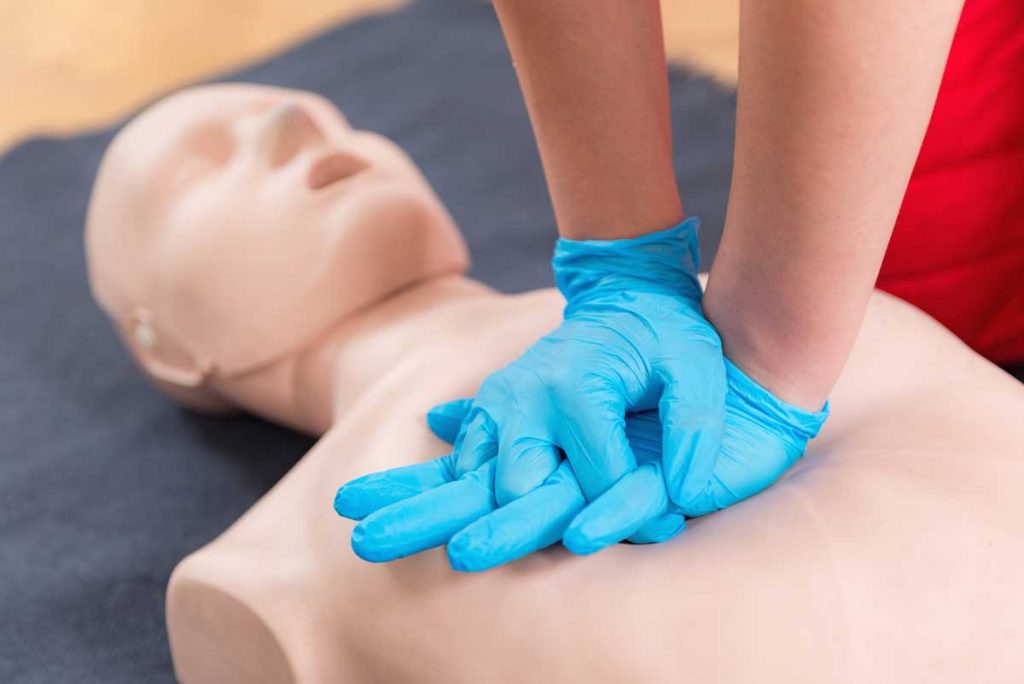
During express cpr courses that consist of AED method, you should handle the training system several times, from opening up the cover to affixing pads and following prompts. It is not enough to watch the trainer. Under stress, muscle memory counts.
The function of refresher courses and practice after fast certification
Any first aid certificate has an implied expiry day, whether printed or otherwise. Skills decay fast if you never ever use them. Research and experience both reveal that CPR top quality drops visibly within a year for most people who do not practice.
That is where fast cpr refresher courses make their place. Since the foundation has already been laid, refreshers can be much shorter and extra concentrated on drills, updates, and correcting bad behaviors. Attending a vigorous, functional session every 12 months is even more efficient than recertifying every 3 years with a lengthy course that mainly duplicates theory.
Outside of formal courses, develop little behaviors:
Use a timer application or metronome periodically to practice breast compressions on a firm surface area in your home, using a cushion. It is not comparable to a manikin, yet it enhances rhythm and body mechanics.
Mentally rehearse your actions when you walk right into new atmospheres. Where is the AED in this gym, shopping mall, or work environment? Exactly how would I call for aid below? People that pre plan similar to this tend to act faster.
Share what you discovered with associates or household. Mentor, even informally, reinforces your recall.
Many express first aid training providers send out email updates when standards change, such as adjustments in CPR sequences or bleeding control suggestions. Check out those. They are usually short and practical.
Special considerations for child care first aid in fast formats
Childcare settings are one place where I regularly push back when employers want the fastest, least expensive option. Youngsters are not simply little grownups. Their respiratory tracts, vital indications, and typical emergencies vary enough that generic first aid training can leave harmful gaps.
An express childcare first aid course must still be fast, yet it must consist of hands on baby and youngster CPR, choking monitoring for infants and young children, child specific healing placements, and reasonable scenarios like play area injuries, allergic reactions at lunch, and less competent infants in cots.
If a provider uses express childcare first aid courses that are really much shorter than their adult only fast first aid courses, ask what has actually been gotten rid of. In my view, it is better to schedule a somewhat longer express child care first aid training session than to cut important pediatric content just to fit a narrow time slot.
For moms and dads, a personal express childcare first aid course at home, run by a certified instructor, can be among one of the most valuable mid-days you spend prior to a baby shows up. You might forget the trade names, but you will certainly remember what to do when a kid begins choking on an item of food.
Matching your inspiration to the appropriate sort of course
People publication fast first aid courses for different factors. The motivation matters.
If you are going after a box tick, such as a workplace demand, you might be attracted to choose the outright minimum: an extremely short course, at the lowest rate, on the nearest day. You will likely still satisfy your conformity responsibility. Just be sincere with on your own concerning what that acquires you in an emergency.
If your inspiration is individual, such as taking care of senior parents or intending to be useful in your neighborhood, it is normally worth stretching a little. Perhaps pick an express first aid course that includes an added hour of situations, or incorporate a fast first aid course with an extra devoted CPR training session later on in the year.
Some employers jeopardize well by sending out a core group to a longer, a lot more detailed first aid and cpr course, after that scheduling express cpr courses or fast first aid refresher courses for the remainder of the team. This way, there is constantly someone on website with deeper training, sustained by colleagues that contend least strong basics.
When you understand your own factors, the advertising around fast first aid becomes simpler to filter. You stop going after the quickest option and start seeking the most proper one.
When is fast not suitable at all?
There are circumstances where I would not advise a fast first aid course as your main or training.
If you are entering an occupation where initial feedback belongs to your core obligation, such as protection, outdoor adventure assisting, lifeguarding, or healthcare assistance job, you require even more time in situations, more depth on medical problems, and a lot more assessment than a lot of fast layouts can provide. Express first aid can still play a role for refresher courses, yet not as the preliminary foundation.
If you have considerable stress and anxiety concerning emergencies or freeze conveniently in high stress moments, a slightly much longer, a lot more supported course may be better. Hurrying with material when someone is currently strained can backfire. Decreasing a bit to build confidence, with mild rep, repays later.
If your workplace or regulatory authority clearly calls for thorough first aid and cpr training classes with established minimum hours, a much shorter course might leave you non compliant, also if it really feels useful directly. Always check the official wording.
Fast, express, and compressed layouts are devices, not global solutions. They function wonderfully when matched to the ideal learners and contexts.
Turning fast training right into real world readiness
At its ideal, a fast first aid or express cpr course values your time while still treating emergencies with the gravity they deserve. The fitness instructor understands they have a restricted window to assist you build practices that will emerge under stress, so they focus on what absolutely matters.
You leave with a first aid certificate that pleases your employer or regulatory authority, yes. Extra importantly, you walk away having felt your weight over someone's breast, having heard the AED voice triggers, having actually rehearsed those initial secs after you walk into an area and first aid course Perth see somebody collapsed on the floor.
That is the action that counts.
If you will search for a fast first aid course near me or search express first aid courses online, maintain a clear picture in your mind: not the class, however the individual who might someday require you. Pick the course that prepares you to help that individual quickly, steadly, and successfully, even if it includes an extra hour or needs a somewhat longer drive.
Fast is useful. Experienced is important. Go for both.